Showing posts with label chiles. Show all posts

Sunday, October 10, 2010

Hauling in the chile harvest


It's that time of year again....the chiles and peppers have finally ripened and loads of them are now available in their freshest form at our markets, or have been given as a component of the CSA. Not only do our chiles circulate to all of these places, but a grand number of them also make the trek a few miles north to the commercial kitchen off Shiloh Road in Windsor. Here they are cleaned, chopped and prepped for storage in a number of ways including chile jam, hot sauce, dried chiles and chipotles, specialty blends like Mole, chile powders, you name it. Lee is always trying something new and innovative, often reaching back into traditional cultural techniques and recipes to bring the modern day consumer something either they have never tried or something that fills them with nostalgia.

Enjoy your fresh chiles while they are here. It has been a shorter season than normal all around....who knows when the frost might sneak in and rob us of all these summer fare that we are spoiled with right now. Even when it does, you can be sure Tierra will have chiles for you year-round in one form or another.

Sunday, July 4, 2010

Chile Crop Status Report


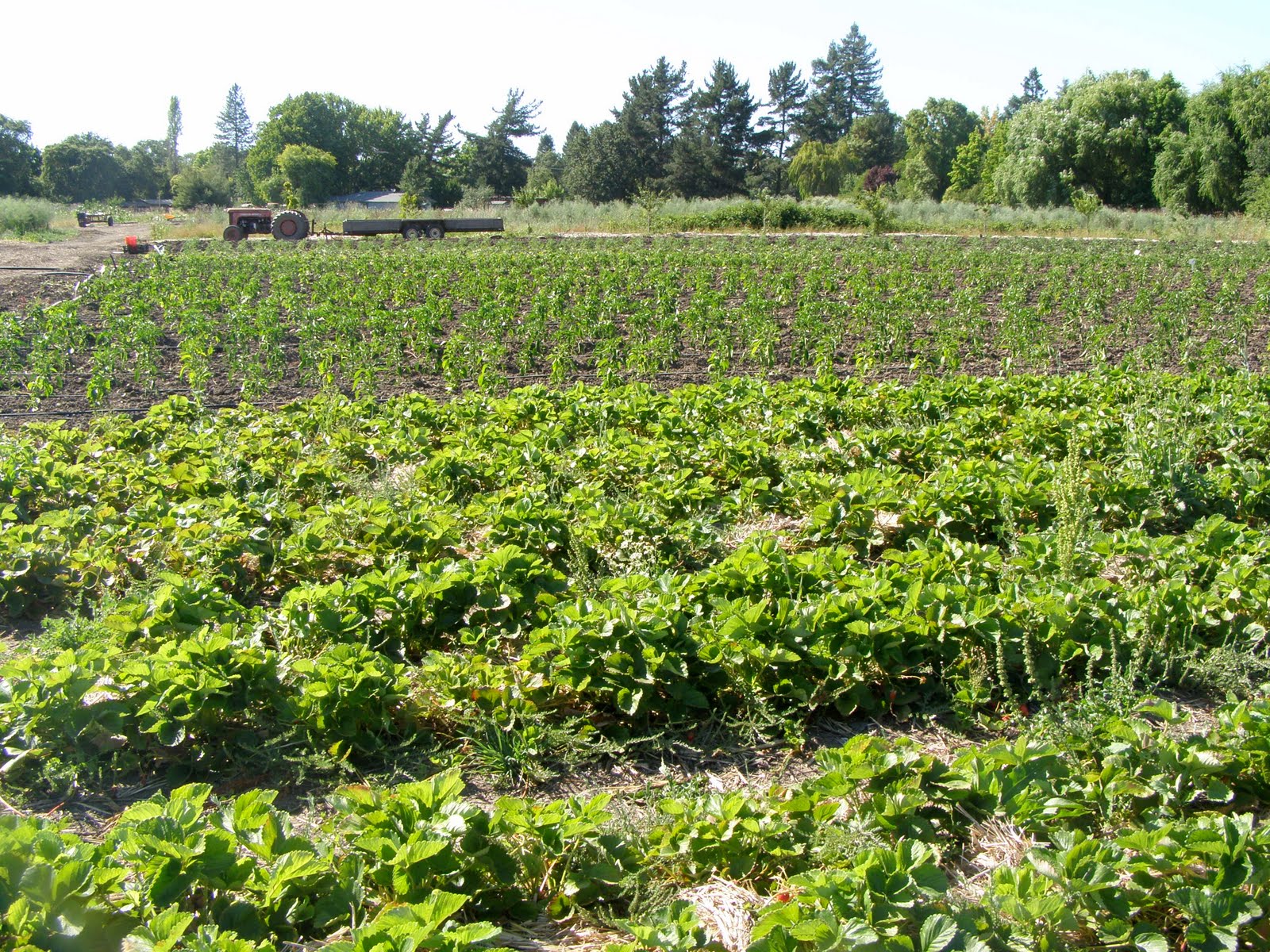
The topic of this photo is in the back drop, in the foreground you see the mature foliage of the Chandler strawberry crop (soon to be finished with their June-bearing annual life cycle).

The background contains the chile and pepper crops, inching their way along to maturity. It won't be long now as initial fruit set has begun on many of the varieties and heat has finally kicked in around the county. At this time Lee usually begins harvesting many of the early fruits to promote more flowering and then more production down the road. If you are lucky this week you may have run into a green chile or two if you intercepted one of Lee's market days. Again, one of those special surprises you can never quite predict around your local farm.

Saturday, May 8, 2010

Sweet and Spicy


What a pleasure to have sweet peas to snip first thing upon arriving to work at the farm stand each day. Lee made a timely sowing of sweet peas seeds last fall and now the incredible long stemmed variety is flowering full blast, enough to keep me busily chasing blossoms throughout a day. This is not the first farm job where I have arrived early to work in order to be sure the sweet peas make it out of the field and are available to those who love the sweet scented and often nostalgic little pea flower. These are the kinds of details in life that bring me joy whether or not appreciated by others.

Well paired with the vibrant hot sauces in the farm stand, the image above is a great representation of the sweet and spice that can be obtained at Tierra this moment in the season. Come get some sweet peas for yourself or a loved one until I run out of time to keep cutting them each morning. The work only snowballs around the farm from this point on.

Wednesday, May 5, 2010

A photo of a painting of a photo


In August of 2008 I took a nice chile/pepper overview photo. From left to right the visual pleasure of Gypsys, orange and yellow bells, and then on to various spicy chiles in enjoyed in this image. It was then passed on to artist, painter and long time farm relation Barbara Toschi.

Here is a close up of her final product that is proudly displayed behind the sales counter at the farm stand each day. Not only is Barbara talented with paint, but she also has a historic role with the farm as a landowner who once welcomed Lee and Wayne to farm her land in the early 1990s. See the Tierra History page for more info in the "Getting Bigger" section. These days her role continues as farm friend, customer and supporter with an obvious creative vision of what the farm produces.

Do you notice this grand piece of work when checking out with your produce? Take a moment to appreciate Barbara's work next time you pass through. She will take it away for a week or two coming up as it will be entered in a Windsor art show....maybe you'll find it there?

Wednesday, April 21, 2010

Greenhouse Review

Sunday, April 18th, was our Greenhouse Open House Event. Drop in guests from across Chalk Hill Road to as far away as San Francisco dropped in throughout the day, some familiar with the farm and all it does, others simply curious about topics of growing and seeking an opportunity to engage in discussion. Many people went home with a plant or two to stick in their own gardens and a taste of the well known chile jams.

I feel horrible that I came away from this day with no group shots! Next time! I was able to document the plants as usual and will provide a short visual tour of what I saw this season in the greenhouse. As my first visit to the place in 2010, I was overly impressed with how well managed things seemed in there. Meet Zeni, Lee's number one right hand woman in the greenhouse and all things that occur to assist the farm at the Chalk Hill Road property.


Zeni goes about her midday watering responsibility after helping prepare for the Greenhouse Event last Sunday....Lee's pup, Cloudy, has a thing for water and water wands in particular. This complicates the watering process somewhat as it becomes a game and a job all at once.


Baby chiles here. This is a small fraction of the bigger picture.


Baby basil with a steaming camera lens. Many visitors were chased right out of some of the more heated areas of the greenhouse on Sunday as it was such a beautiful day....it was also one of the warmer days yet in the greenhouse. Others enjoyed and basked in the hot and humid climate that could be found in the specialty structure.


Corn. Tierra grows sweet corn, popcorn, flour corns, hominy corn. Which one is this? I'm not sure, I never asked Lee. My guess it that this is a flour corn that takes a long time to mature. The greenhouse start gives it a boost to ensure it matures before cold weather comes in fall and that pests do not damage baby seedlings in the field as often happens when things are direct seeded in spring.


Chiles....Ancho specifically. I think these are my favorite. The immature green Poblano will do, but a sweet and spicy, ripe, red Ancho is perfect for everything. I could eat a roasted Ancho a day and maybe I will when their season rolls around this summer/fall. Looks like there will be lots as usual!


Overview of red malabar spinach (a heat loving green that grows like a vine), first year asparagus seedlings (to plant out in 2011), previously described corn and a mix of basil and chiles.


Close up is either cabbage, broccoli or cauliflower....I think cabbage based on the leaf shape. These will go out to the farm field immediately, maybe today or tomorrow. They are ready and we just need the weather to allow access into the field. Behind is a sea of other brassicas and tomatoes and lettuce. All ready for a life in the great outdoors.


One more look at the forest of tomatoes and lettuce ready to go out. You could eat a salad right out of the greenhouse right now. Lee is masterful at bringing plants to a healthy and mature state before putting them outside. This approach gives them all that much more ability to survive the unexpected conditions that could impact them once exiting the greenhouse including weather, pests, soil, water, whatever!


A big thanks to everyone who came out to appreciate some the work that goes on behind the scenes on the farm. We hope you learned something new and look forward to seeing your faces again at our next gathering this season and at the farm stand, CSA, or farmer's market all season long.

Finally, check out this You Tube Video production by one of our guests of the open house, he took it upon himself to do a thorough overview of the structure and has shared his enthusiasm for all to watch and learn.

Thursday, February 18, 2010

Why Tierra?

Sometimes we make assumptions that people know why what we do is special. Just in case you did not already know, here is my overview of those themes I am continually trying convey to some unknown audience though this blog forum.

Grains. While only scratching the surface of this array of possibility, Tierra has expanded to produce somewhere near 20 varieties of dried beans and 3 varieties of corn for corn meal and polenta. Lee and Wayne are interested in expanding and diversifying the grain component of the farm as land, specialized equipment and demand motivate that evolution.

100% from the farm-local. This is at least one place you go where you do not have to wonder where you food has come from. Emphasis on the farm stand and CSA as distribution locations ensures your vegetables have gone no further than from the farm to your table. There is no supplementary product brought in from distributors or other local farms even. Tierra produces plenty of food on their own and has creatively found ways to expand the season of production in the form of hearty varieties, storage crops and value added products.

Sweetest carrots and strawberries in town. This is the truth and if you do not believe it is worth it just to come shop from us for these items, you are invited over for a sample. Fertile soils and expert growing experience has ensured you will encounter the highest quality of product with character unique to this farm. These are not just carrots and strawberries, but Tierra Carrots and Strawberries.

The vast array of chiles and chile products. Undoubtedly one of the farms specialty crops, Tierra grows chiles and peppers of all sorts with origins and traditional uses that are scattered across the globe. Not only will you find these unique items in fresh form during chile season only (approximately late July-early Nov), but creative methods to store these crops have resulted in a diversity of products all year long including dried chile powders, chipotles, hot sauces, jams and more.

That is all. Tell your family and friends. The farm looks forward to another busy season as the start of spring is now upon us all.

Friday, October 2, 2009

New Hot Sauce Variety

Oh so much work goes into developing and producing new and unique products in order to appeal to customers and make use of what is grown at the farm. This season the hot sauce line is expanding when possible....the product development is seasonal along with everything else at the farm. A grand array of chiles are available NOW for fresh consumption, processing of the famous chile jams, drying and smoking chiles for powder and dried chiles and chipotles later on, and the hot sauce. This opportunity dies with the frost, colder mornings are already upon us.

The hot sauce will last until sold out and often they go quick. Take a sample or two at the farm stand or Ferry Plaza. Grab a bottle or two for use now or after fresh chiles are a thing of the past. Thank goodness for sugars and vinegars to preserve the flavors of our fresh food. Tierra is a master of preservation in my perspective whether it been jam making; fermenting pickles or sauerkraut; dehydration; crop selection like popcorn, corn meal or dried beans. A lot of thought and experience has gone into providing for us all season long creatively and with a continual diversity of flavors, colors and textures as our palates desire.

Monday, August 31, 2009

Shishito

The Shishito is another heated, small frying pepper. It has thin walled flesh, is sweet and hot and is popular in Japan. Also popular now with chefs nationwide in the U.S., this small fryer is found on many restaurant menus and enjoyed at home as they become available.

Uses: Quite popular now in our modern culinary culture, Shishito peppers may be fried and blistered, grilled, prepared as a tempura, etc... These peppers have the perfect medium heat where the Spanish Padron frying pepper may be too spicy at times for some (myself included).

Heat: Individual peppers may vary from mild to hot.

Wednesday, August 12, 2009

Inferno Hungarian Hot Wax Chile

Inferno/Hot Spot


The Inferno is a type of Hungarian Hot Wax (wax means yellow color) chile and starts off yellow to lime green and once picked turns orange and finally a rich red. Deceptively hot, this 7 inch long chili has a distinct, fruity sweet pepper taste with an after burn.

A main ingredient for our chipotle products, excess inferno chiles are grown, harvested, chopped, smoked and dried throughout the harvest season to create flavorful chipotles, chipotle powder and our popular Panonia chile jam that is made up entirely of Hungarian chiles.

Uses: It is unique and wonderful according to an addicted farm stand customer who uses it to flavor and spice up her bean dishes throughout the season and using those she has stored for the winter in her freezer.

Heat: Very Hot! Castrate (remove seeds and membrane) to make heat level more palatable.

Tuesday, July 28, 2009

Padron

Padron


Pimientos de Padrón are named after a town in Galicia Spain. They are usually fried in salt and served as a tapa. Eating them might be compared to playing Russian Roulette. Each pepper is delicious, but occasionally you will get one that is explosively spicy. Sometimes almost all of them are highly explosive but then occasionally, an entire batch is sweet. Enjoy the gamble!

Uses: The best way to eat them is to savor them in unfussy glory—toss in a pan with olive oil and cook over high heat until blistered, about 3 to 5 minutes. Sprinkle with sea salt, and devour.

Heat: Mild to extremely hot, notoriously variable.

Monday, July 20, 2009

Aji

Aji Amarillo

Aji Amarillo means yellow chile in Peru and refers to the vibrant color of this chile when allowed to fully ripen. Aji is the commonly used word for chile in the South American region.

Other Names: In dried form this chile may be referred to as cuzqueno (from Cuzco, Peru).

Uses: The fresh and vibrantly colored pods are wonderfully fruity when used fresh and are a perfect ingredient for ceviches and salsas. The pods are also dried and ground to make a beautiful and uniquely flavored powder. Aji chiles are considered a staple ingredient in Peruvian cuisine.

Heat: Very Hot. Aji chiles compete with or exceed the heat of Habanero-type chiles both being members of the chinense species and containing some of the highest levels of capsaicin.

Friday, July 17, 2009

Habanero

Habanero

The name Habanero means from Havana, referring to Havana, Cuba where it may have originated. Noted to be 50-100 times hotter than a Jalapeno and is one of the hottest chiles to be found. Be careful when handling this intensely hot chile.

Other Names: Habaneros are closely related to and are often called Scotch Bonnet and Jamaican Hot chiles.

Uses: Complimenting the intense heat of these chiles is a distinct tropical fruit flavor that mixes wonderfully with tomatoes and fruit. The riper the chile the sweeter the fruity flavor will become. Habaneros are used for salsas, chutneys and marinades, and “jerk” recipes and are increasingly popular as a bottled hot sauce. Preserve some for later by freezing whole pods or drying them for later use.

Heat: Extremely Hot. Hababneros are members of the chinense species and contain some of the highest levels of capsaicin.

Saturday, July 11, 2009

Cayenne

Cayenne
Red and Golden

The origin of this chile is likely traced back to the South American country called French Guiana. It may have been named for the capital city that exists here or the river called Cayenne that flows through the country. The name may also be rooted in the South American Tupi Indian word for pepper, kian. Portuguese traders have since spread this chile around the world.

It is unfortunate to learn that commercially produced “Cayenne” condiments or spices may or may not actually contain the actual chile. Rather a blend of similar pungent and small red varieties of the same species may be used to create a product using the name Cayenne.

Other Names: Sometimes called a Ginnie pepper. Both the guajillo and de arbol chiles are types of Cayenne.

Uses: Caynne may be used in sauces or soups, in bottled hot sauces, or decoratively. Favored in Creole and Cajun cooking, Cayennes may often be selected for gumbos and like dishes. Use in fresh green or red form for spicy salsas. They are predominantly used as a dried chile powder.

Heat: Very Hot.

Friday, July 3, 2009

Jalapeno and New Mexican Chiles

Jalapeno

The name of this well-known chile came from the town of Jalapa in the Mexican state of Veracruz. The Jalapeno is likely the most well known chile of all.

Uses: Jalapenos may be used for virtually any recipe including green or red variations in ripeness, de-veined or de-podded chiles to lighten the amount of heat, raw or roasted, dried or smoked as chipotles*. Perfect for salsas, soups, pickling, or any all-purpose spice need.

*Chipotles are often made using Jalapenos. Our chipotles, however, are made from a variety of chile types, including the traditional Jalapeno. Sample from the diversity of chipotles that Tierra offers to find what variety you like best.

Heat: Hot, but variable.


New Mexican Varieties

New Mexican chiles include the Anaheim (so named when it’s seeds were historically transported from Santa Fe, New Mexico to Anaheim, CA where a chile cannery operated in 1900), the Espanola Improved (best as a dried chile with thin walled fruit), Big Jim (one of the larger varieties-best for stuffing).

Traditionally New Mexican varieties have fallen under the umbrella name Anaheim and perhaps have become misunderstood as a result. In fact, there is a diversity of New Mexican chiles under cultivation, approximately 50 percent of the U.S. chile production is represented by New Mexican varieties, the majority still produced in New Mexico.

Uses: Use green (chile verde), or red (chile colorado). The red form of any chile has had more time to ripen and develop sweet flavor, the green version has a fresh green chile flavor that is perfect for rellenos. Deep red, ripe and leathery New Mexican chiles provide the materials you needs to make ristras, chiles hung to dry in the autumn sun. Roast them red and green.

Heat: Mild to medium to hot, may be quite variable.

Wednesday, June 24, 2009

Serrano/Fresno/Santa Fe

Serrano


In Spanish, the literal translation of the word Serrano means “from the mountains.” This title is in reference to the supposed origin of this chile from the mountain ridges, or serranias, located north of Puebla and Hidalgo in Mexico.

Uses: Serranos are primarily used in fresh green form, but will also ripen to a sweeter and more mature dark red. Either color can be used interchangeably in fresh salsa, roasted for sauces, or pickled. This is a great substitute for a Thai chile if one cannot be found. Serranos are mostly used fresh due to their thick flesh, making drying difficult.

Heat: Hot.

Fresno

This chile was named for the city of Fresno, CA where it was very likely developed by the Clarence Brown Seed Company in 1952. The Fresno chile is a medium sized wax-type fruit and is sweet ad hot, especially when allowed to ripen entirely to its red form. Don’t mistake it for a red Jalapeno, the Fresno has broader shoulders and more heat. It may also be mistaken for a Santa Fe chile that has a similar broad shape, but may be distinguished by color. Fresnos are never yellow or orange like the Santa Fe, but mature from light green to red.

Other Names: May be referred to as chile caribe or chile cera.

Uses: Fresno chiles are often used in the green stage for seasoning, sauces and pickling. They are also excellent for use in salsas, ceviches, stuffing, and may be roasted and added to sauces.

Heat: Hot.

Santa Fe Grande

The Santa Fe is a type of guero chile, a Spanish word for blonde. This word applies to any yellow pepper or chile in Mexico. Although the Santa Fe ripens fully to a deep red, it is often used in a mature yellow phase therefore making it relevant as a blonde/guero chile. These chiles are grown throughout the southwestern U.S.

Uses: Santa Fe chiles have a thick flesh and perhaps a melon-like flavor with a good sharp heat. Traditional uses are in yellow moles, salsas and they may be pickled. Additionally, ornamental quality of these and other small chiles is not to be overlooked.

Heat: Hot.

Monday, June 22, 2009

Poblano, Ancho, Mulato

Poblano


The name Poblano is derived from the name of a valley called Puebla that is located south of Mexico City where these chiles were first cultivated.

Other Names: Poblano refers to the green, or less mature, stage of several different varieties of chiles including Ancho and Mulato.

Uses: This is one of the most popular fresh chiles used in Mexico. Always use cooked or roasted, roasting enhances the full and earthy flavor. The large size and thickness of flesh of the Poblano makes them ideal for chiles rellenos or other stuffed chile dishes.

Heat: Mild to medium spice.

Ancho


The name Ancho means broad, referring to the broad and heart shape of these pods once they have dried. Anchos are probably the most commonly used dried chile in Mexico where many varieties are cultivated. Anchos are so popular they may be found under cultivation somewhere in Mexico year-round to supply market demand, but will also grow well in the right regions of the U.S.

Other Names: Ancho is the red, ripe form of the green Poblano chile. Not to be confused with the Mulato, both chiles are called Poblano in their green chile stage, Ancho ripens to a deep red and Mulato a dark chocolate brown color.

Uses: This is an excellent all purpose dried chile and chile powder. The medium spice combined with the sweet dried and concentrated flesh is perfect for most recipes including sauces, moles. When in season, try roasting a perfectly ripened Ancho and indulge in a superb fresh chile.

Heat: Variable from mild to medium.

Mulato


Mulato means and is a light brown cultivar of a ripe Poblano, comparable to the ripe, red Ancho.

Other Names: This chile ripens from a green Poblano to a chocolate brown chile. This chile may be found mislabeled as a Pasilla in the U.S.

Uses: This is an excellent dried chile and chile powder. The medium spice and sweet brown flesh pair perfectly both fresh and dried. Try feasting on a fresh roasted Mulato chile when in season or snack on a few dried pieces as you formulate the perfect recipe for such a flavorful chile. Mulatos are a great choice for sauces and moles.

Heat: Variable from mild to medium.

Friday, June 19, 2009

Pasilla/Chilaca

I'm starting a new research project. During the winter it was dry beans. Now as I prepare for a fresh upcoming chile season, I'm applying my brief experience with the farm so far to create some interpretation for customers into all of this chile diversity that is going on both in the dried storage season and in the fresh harvest season. As I work my way through the extensive list of chile varieties using my chile library that is comprised primarily of books by the author Dave Dewitt (if you want to seek out your own info) I will share my rough drafts for your learning pleasure here.

Pasilla/Chilaca


The name Pasilla comes from the Spanish word pasa, meaning raisin. Specifically, Pasilla translates to little raisin. This is a result of the physical brown and wrinkled appearence of this chile when dried.

Other Names: Chilaca, or Chile Chilaca refers to the fresh form of this chile. It may also be referred to as chile negro on the west coast of Mexico. Often Pasillas are confused with Anchos and Mulatos in our commercial produce industry.

Uses: Pasillas are mostly used in dried form, often as an ingredient of mole sauces or adobos. It is described as a component of the “holy trinity” of chiles used for traditional mole sauces, along with Ancho and Mulato chiles. This unique chile has a gentle flavor that is mostly used in dried pod or powder form. Make your own mole, or try ours!

Heat: Mild to medium spice.

Tuesday, June 9, 2009

Watering the Chiles-Drip Irrigation

Yesterday Jose and Kara got the water on the chile and pepper plants. These plants are watered using drip irrigation versus overhead sprinklers for various reasons, many of which I'm sure could be better explained by Lee and Wayne.

The number one reason for using t-tape of drip irrigation on crops is usually water conservation. Compared with overhead sprinklers, the amount of water used and the concentrated placement of the water is specifically managed to water each plant at it's roots. Plants like peppers may become fragile and top heavy as they mature where overhead water might cause them to topple over and snap. The plants may not respond well to water all over their recently pollinated flowers and foliage as they try to mature to healthy plants without disease and full of sweet and spicy fruits. Weed management is simplified with drip irrigation. While there is now a plastic tube in the way when you do want to cultivate around the plants, the area being watered to encourage surrounding weeds is much less than areas that have been sprinkled. There many many benefits to drip irrigation!


Alternatively, there is cost in this process. Not only is there investment in the resources and infrastructure such as that giant roll of plastic tape and all the fittings and fixtures to make the system complete, but also there is the time and care that goes into setting it all up. Luckily it is just a one time thing for the season until a gopher chews a hole through a tape and maintenance is obligatory, or until frost hits and the entire set up must then be disassembled.

Kara and Jose went about the motions yesterday getting the tape carefully placed around the plants, another practice to ensure best growing practices and conditions for production in the fields. It was a bit breezy out there yesterday as it seems it is any day you are trying to haul super long pieces of tape down crop rows. Rather than breaking her back and hunching over to keep the tape from blowing in the wind as Kara walked it down each row, she smartly innovated a technique of wrapping it around her ankle as she walked to keep tension on the tape out of the wind while keeping her body ergonomically protected from farm work.

Overhead sprinkling absolutely has it's use and niche in the farm fields, I think a majority of the crops at Tierra are given overhead water. Obviously, the set up can be less trouble, there is more freedom of cultivation, the water may benefit some kinds of plants in washing away pests, it may assist in germination of dense or smaller seeds that need even water coverage throughout the rows, etc... These are just a few more things to think about when planning and operating the farm.